

Heat rejection window tint in San Antonio: test it first
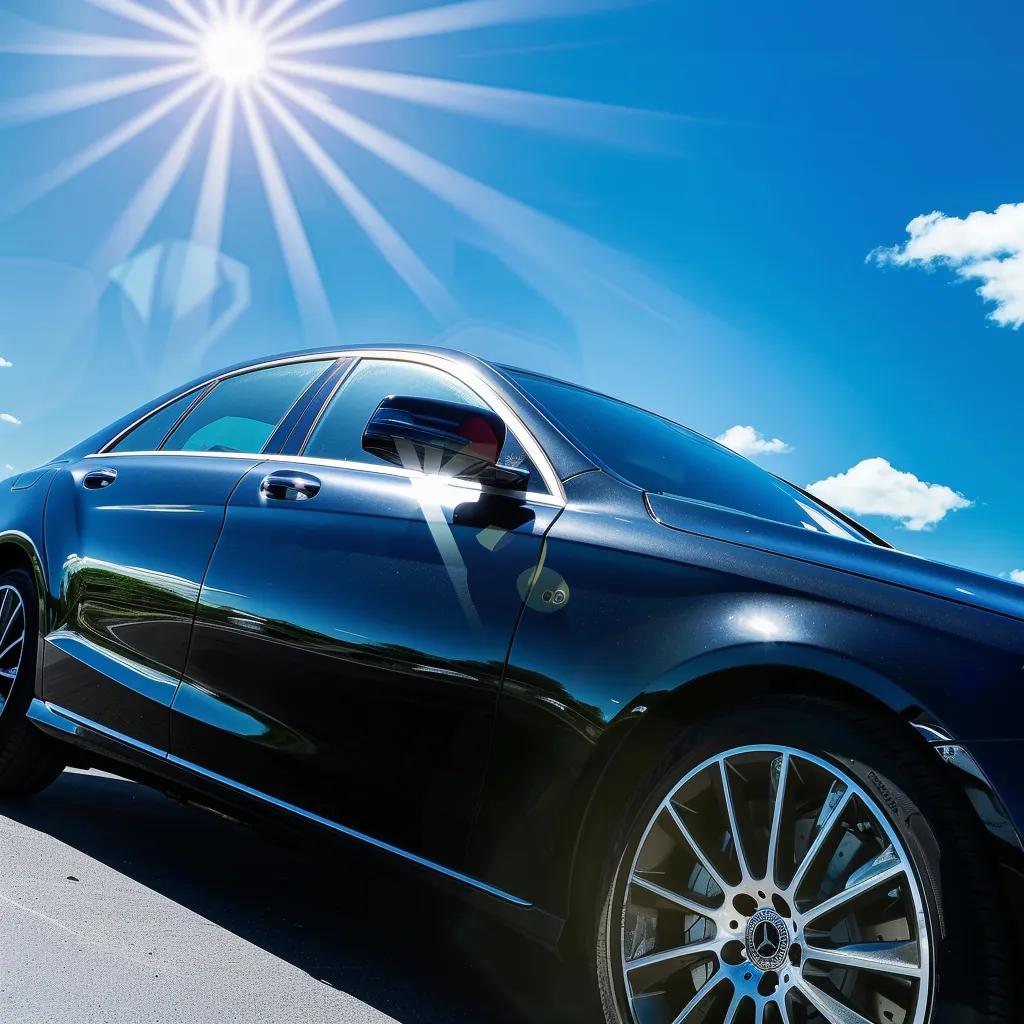
Two pieces of window film can look the same on a sample board and feel nothing alike on your arm at a red light on 1604 in August. Darkness is what you see. Heat rejection is what you feel. They are not the same number.
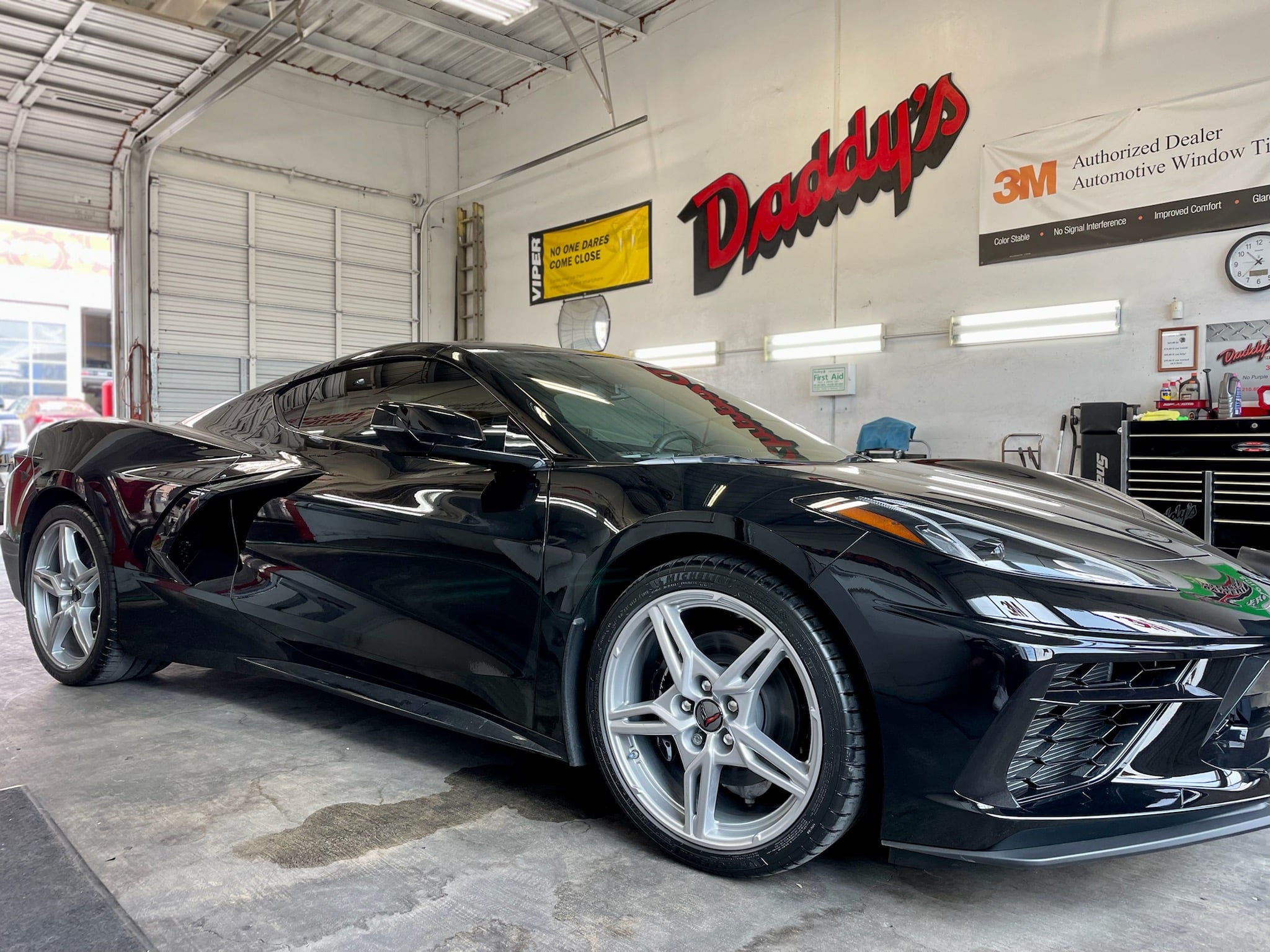
That is why we keep a heat lamp at our shop on Huebner Road in San Antonio. Before you pick a film, you can put your hand under the lamp, slide each sample between your hand and the light, and feel the difference yourself. We have been tinting cars here since 1988.
Here is what heat rejection window tint means, and how to read a spec sheet so the sample in your hand makes sense.
What does heat rejection mean on window tint?
Sunlight carries three kinds of energy that matter here.
Visible light. What you see. Tint darkness is measured as VLT, or visible light transmission. A 25% film lets 25% of visible light through.
Infrared (IR). What you feel as heat on your skin. You cannot see it.
Ultraviolet (UV). What fades your dash and burns your skin. You do not feel it right away.
Heat rejection is mostly about the infrared part. As we put it on our ceramic window tint page, most of the heat you feel from the sun is infrared radiation, not visible light. So a film can be very dark and still let plenty of heat through. A lighter film can stop a lot of it.
Why can't you judge tint by how dark it looks?
Because your eyes only read the visible part.
Dyed film darkens the glass, but it offers minimal infrared heat rejection. Ceramic film uses microscopic, non-conductive ceramic particles instead of dye or metal, and it is built to keep infrared out. Same shade, same look from the curb. After an hour in a San Antonio parking lot, you will not need a meter to tell them apart.
This matters most on the front doors. Texas DPS requires the side windows to the right and left of the driver to let in 25% of light or more (Texas DPS window tint standards). You cannot just go darker up front to get cooler. The film has to do the work through performance, not shade.
How does the heat lamp test work at our San Antonio shop?
You hold your hand under the lamp. We slide a piece of film between the lamp and your hand, then the next one. You are not taking our word for it. You are feeling it.
We said it in our ceramic vs dyed tint guide: come by the shop and we will show you the films on a heat lamp and let your hand make the decision. We can also show you film samples in different shades before you commit, so you see the look and feel the heat at the same visit.
A few tips so the test tells you something useful:
Compare the same shade. A 35% ceramic against a 35% carbon is a fair fight. A 5% film against a 50% film is not.
Hold still for a few seconds. The difference builds. A quick pass can fool you.
Ask what each sample is. Brand, film line, and shade. Then match it to the spec numbers below.
Carbon vs ceramic tint: what is the real difference?
We carry 3M and XPEL film. Inside the 3M lineup, the comparison that trips people up is carbon (3M Color Stable) against ceramic.
Carbon: 3M Color Stable. A solid step up from dyed film. It resists fading better, has a nice matte finish, and improves heat rejection. Our post on Texas tint law describes Color Stable as built with a patented nano-carbon construction and lists its best heat rejection at 57%. It resists the purple fade cheaper tints are known for. Where it falls short is infrared.
Ceramic: 3M Crystalline and 3M Ceramic IR. Our premium tier. Ceramic delivers the highest infrared heat rejection of the three film types, blocks up to 99% of UV, holds its clarity, and has no metal in it, so your phone, GPS, Bluetooth, and TollTag keep working. That same post lists 3M Ceramic IR at up to 66% of total solar energy rejected and 95% infrared rejection. 3M Crystalline rejects a high share of heat and infrared without going dark.
How do you read a window tint spec sheet?
Every film comes with a spec sheet. Four numbers matter.
VLT (visible light transmission). How dark it looks. Lower is darker. This is the number Texas law regulates.
TSER (total solar energy rejected). The share of all the sun's energy the film keeps out: visible, infrared, and UV together. It is the closest single number to "how much cooler will my car be."
IR rejection. The share of infrared the film blocks. Often the biggest number on the sheet.
UV rejection. Quality films block up to 99%, so it rarely decides between two good films.
Here is the part that confuses people. A ceramic film can list 95% infrared rejection and 66% total solar energy rejected at the same time, and both are honest. The IR number covers only infrared. TSER covers everything, including the visible light a lighter film lets through on purpose.
So compare TSER to TSER and IR to IR, at the same shade. Also notice when a sheet says "best" or "up to." Those figures usually belong to the darkest shade in the line, and the shade you can legally run on your front doors may come in lower. Then go back to the lamp and see if your hand agrees.
What is the best window tint for Texas heat?
For a San Antonio car that parks outside, we lean toward ceramic. Our summers are long and the sun does not let up. Ceramic pays you back every time you get into a car that is not scorching and every time the A/C reaches temperature faster.
Carbon still makes sense for a garaged car, a tight budget, or a second vehicle. Color Stable will look good and keep its color.
Two more things before you choose:
Your windshield can take clear film. Texas DPS allows clear, untinted UV film anywhere on the front windshield. A clear ceramic film there cuts heat without darkening your view.
Shade and film are separate choices. Pick a legal shade for each window, then the film tier. The front doors are where film quality earns its money.
What does better heat rejection cost in San Antonio?
Our window tint cost guide lays out typical 2026 ranges. A full sedan or coupe runs roughly $250 to $450 in standard film and $450 to $700+ in premium ceramic or crystalline. A full SUV or truck runs roughly $300 to $500 standard and $500 to $800+ premium.
Most vehicles are done the same day, usually in 2 to 4 hours. Most tint packages come with a manufacturer-backed lifetime warranty covering bubbling, peeling, fading, and delamination.
Frequently asked questions
Is ceramic tint worth it over carbon in San Antonio?
For a car that sits outside through a Texas summer, usually yes. Ceramic rejects more infrared heat than carbon at the same shade, and you feel it most on the front doors, where Texas law limits how dark you can go. Carbon is still a good value for a garaged or lightly driven car.
Does darker tint block more heat?
Not by itself. Darkness measures visible light, and most of the heat you feel comes from infrared, which you cannot see. A lighter ceramic film can keep a car cooler than a darker dyed film. Compare total solar energy rejected and IR rejection at the same shade, not darkness alone.
Can I test window tint films before I buy?
Yes. Stop by the shop on Huebner Road and we will put the films under our heat lamp so you can feel the difference with your own hand. We can also show you samples in different shades, so you choose the look and the heat rejection at the same time.
Feel the difference at our San Antonio shop
Numbers help. Your hand settles it. Come by our San Antonio shop at 9003 Huebner Road #202, Monday through Friday, 9 AM to 5 PM, and spend two minutes at the heat lamp before you pick a film. Call (210) 812-5874 or request a free quote with your year, make, and model.